Soundblaster Roar 2 Bluetooth aptX
The CreativeLabs Soundblaster Roar 2 speaker used with Linux and Android devices is recommended.
Soundblaster Roar 2 FCC ID is IBAMF8190.
The Roar 2 allows simultaneous Bluetooth pairing with two devices while getting analog audio from a third device, and will automatically switch playback audio from one to the other if you push pause on one and play on the other device.
Streaming music from one device (say your laptop) and get a phone call on the other device (your smartphone), the SB Roar 2 switches instantly to the phone to ring on the SB Roar 2 speaker.
This is an essential feature feature vs. forcing disconnection and connection manually like as with inexpensive peripherals (headphones, speakers).
SoundBlaster Roar 2 battery life is excellent. Even leaving it on unused for a day, the low-power mode preserves most of the battery life. It can go a couple weeks between charges.
Roar 2
NFC pairing enables instant pairing without going through phone menus. Even $40 Bluetooth speakers have NFC pairing now. NFC Tap-to-pair is an essential Bluetooth speaker convenience feature.
The SB Roar 2 does not to go into pairing mode when not connected. This is good because devices that auto-pair could enable an unauthorized connection to a Bluetooth speaker in two-way headset mode and eavesdrop. The SB Roar 2 mitigates this risk by requiring a button press to go into Bluetooth pairing mode. It’s also straightforward to Bluetooth pair via NFC.
The SB Roar 2 can only receive phone calls. It cannot initiate calls from the SB Roar 2. I find the audio performance to be very good on phone calls. No, it’s not of the quality of a Polycom conference phone, but for single users, the microphone location just left of bottom center of the speaker face seems very adequate for single user conference calls.
SB Roar 2 does NOT go into headset mode when using voice prompts on a connected device – so “OK Google” from Android Wear or your smartphone use the microphones on those devices and NOT the SB Roar 2. This is an excellent design decision. The audio playback A2DP does mute of course since your device pauses playback.
Disable voice prompts by tapping (quickly press) “-” and multifunction key at the same time. This is very useful for comparing audio between normal/Terabass/Roar modes. Enable Voice Prompts by quickly tapping “+” and multifunction key at the same time.
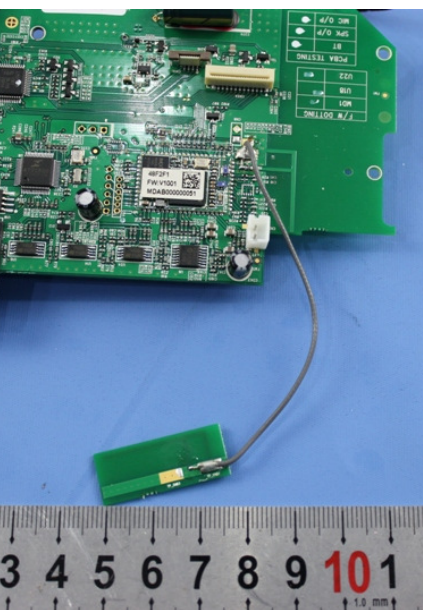
Bluetooth devices (legacy Bluetooth, not BLE) use FHSS (frequency hopping spread spectrum) techniques for maximum reuse of the busy 2.4 GHz band. This means even devices with outstanding antenna systems like the SB Roar 2 can have maximum range severely limited in dense urban areas or elsewhere were 2.4 GHz usage is very high. The dual PIFA antennas of the SB Roar 2 allow for polarization/anti-nulling diversity for greatly improved robustness for audio streaming applications. The PIFA antenna gain is just under 6 dBi specified, and the transmitter conducted output is about 0 dBm, so the Roar 2 EIRP is just under +6 dBm, or 4 mW. I measured maximum range as rock-solid to 25 meters line-of-sight, including phone blocked by body before stopping test. I believe 50+ meters may well be possible in low interference line-of-sight conditions. By comparison, a $2 Bluetooth speaker got about 12 meters range, and a $40 Bluetooth speaker got about 18 meters maximum range under the same test conditions. This test was done under about -70 dBm maximum interference level from numerous Wifi routers in the area. I first attempted the test near a large apartment complex where the Wifi interference level was -60 to -50 dBm from 100+ Wifi APs. Under those conditions, the maximum range for all three speakers ($2, $40, and Roar 2) was about 12 meters.
If the source audio device Bluetooth doesn’t have aptX code, there are USB aptX hardware transmitters that present themselves as sound cards. Confirm the A2DP codec on Linux by powering off the Bluetooth speaker, start Bluetooth sniffer:
hcidump avdtpThen power-on speaker and connect over Bluetooth from your Linux PC. The output includes:
AVDTP(s): Capabilities rsp: transaction 5 nsp 0x00
Media Transport
Media Codec - non-A2DP (aptX)
44.1kHz 48kHz
The Roar 2 has aptX. Similar text is given for AAC and SBC, then finally the SBC codec is chosen:
Terabass reasonably boosts low frequency content. It’s good for volume at all levels, especially low volume. Roar mode is audio compression and brightening for high volume listening. It alters audio characteristics. For high fidelity listening, leave Roar Mode off. Roar Mode is about blasting sound, cranking it to 11. As per the Roar 2 user manual, maximum loudness in “roar” mode is achieved with the speaker externally powered, and I can confirm there is a tangible improvement in loudness being plugged in.
I noticed that I could visibly see the side drivers moving down to 2.8 Hz with “roar” mode enabled and at full volume, though the motion was slight so many 10’s of dB down. The low frequency rolloff seems to steepen below about 58 Hz or so. This was done using an Android frequency generator over Bluetooth A2DP; if someone is really interested I could do a hard-wired test with a lab signal generator.
The sound is much more pleasant that that built into most flat screen TVs or sub-$100 bluetooth speakers overall, more than enough for a city backyard gathering of a small group of friends. You would have to get one of those $300 Bluetooth giant party speakers to get a worthwhile upgrade in volume for parties.
Online reviewers have commented that the MegaStereo OMTP cable does NOT work with Roar 2. It is 4 rings on one end and 3 rings on the other, requiring audio output from the Roar, but the Roar 2 is said to NOT have this so you apparently cannot link two Roar 2 together.
The $10 CreativeLabs mesh case is good to carry the Roar 2. By design it is not waterproof at all nor does it afford much drop protection, as it is meant to give a shoulder strap with transparent audio characteristics. It feels sufficiently light to carry this way, although many might put it inside a backpack. There is a $20 silicone case available from CreativeLabs for more shock protection.